
This was one of my absolute favourites (wich is ironic since historicaly it was given less importancy). This one was the first not to use silver, it is also one of the simplest and cheapest ones I’ve ever heard of. Not even requiring the use of the usual revelatory chemicals.
It is also easily recognizable anywhere since it produces images in Prussian Blue, wich is a fun characteristic coming from the component used: Iron.
Let’s show and tell, shal we?
Materials:
- Iron and Ammonium Citrate (20% concentration)
- Potassium Ferricyanide (10% concentration)
- Tap water
- Hidrogen peroxide
- Paper or fabric
So the specifics of this process come from the combination between the two first solutions metioned, which when combined turn into a green substance on the chosen surface that is really quite ugly, but once exposed to ultraviolet light turns into ferrous ammonium citrate and potassium ferricyanide, wich then forms iron ferricyanide, wich is what produces insoluble Prussian blue.
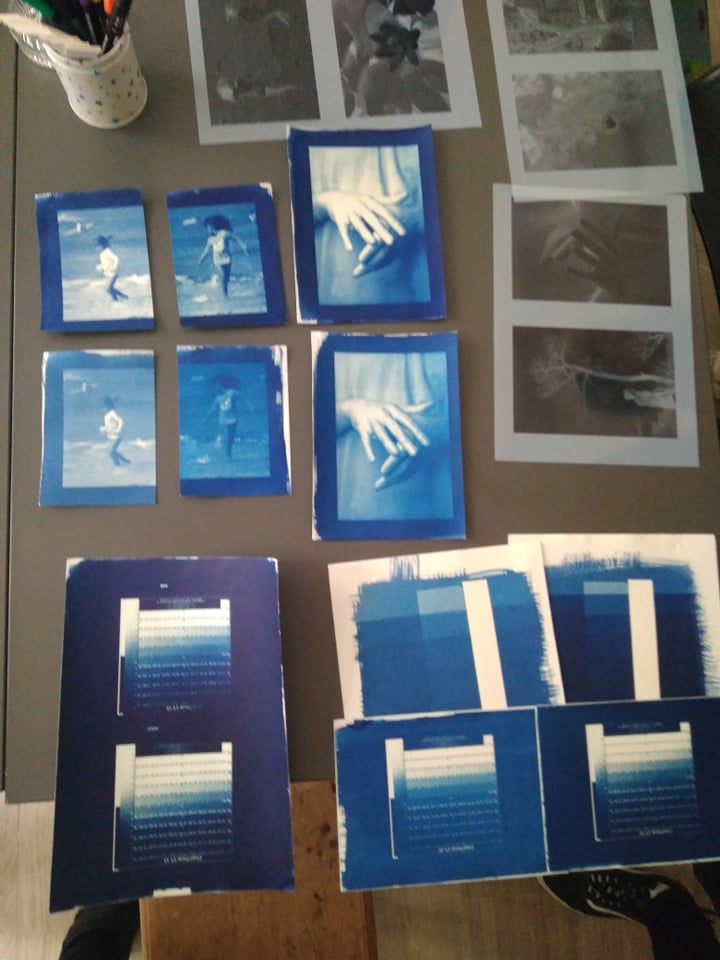
When Prussian blue is formed, it is fixated on the paper and is not soluble in water, when on the other hand while it is just the chemichal (unexposed) it is. So it doesn’t need reveeling. All you need to do is put it in a box regular tap water and the unexposed areas will dissolve, and you have a beathiful Prussian blue clear image (also, soooo much cheaper and easier to do at home)
(I mentioned hydrogen peroxide before because it is a type of water that is cheap, you can buy in any convenience store and helps speed up the process of washing the green out of your image, you use it the same way has the regular water but the tiny bubbles it forms, mean that it is interacting with the none exposed iron and thus removing it faster)
So, cooking:
- Mix the chemicals
- But them on the surface chosen (with a brush, a spatula, whatever you would like to see)
- Let it dry
- Expose it (as a photogram or with a negative on top for a photographic image) in the sun light or any ultraviolet ligh
- Take it of the press and put it inside a box of water while moving it around to make it faster
- Put inside another box with hydrogen peroxide and watch the bubbles, once they stop, there is no more reaction and you can run it through water again (just a regular wash, you can even rub it)
- Dry it out and that’s it!
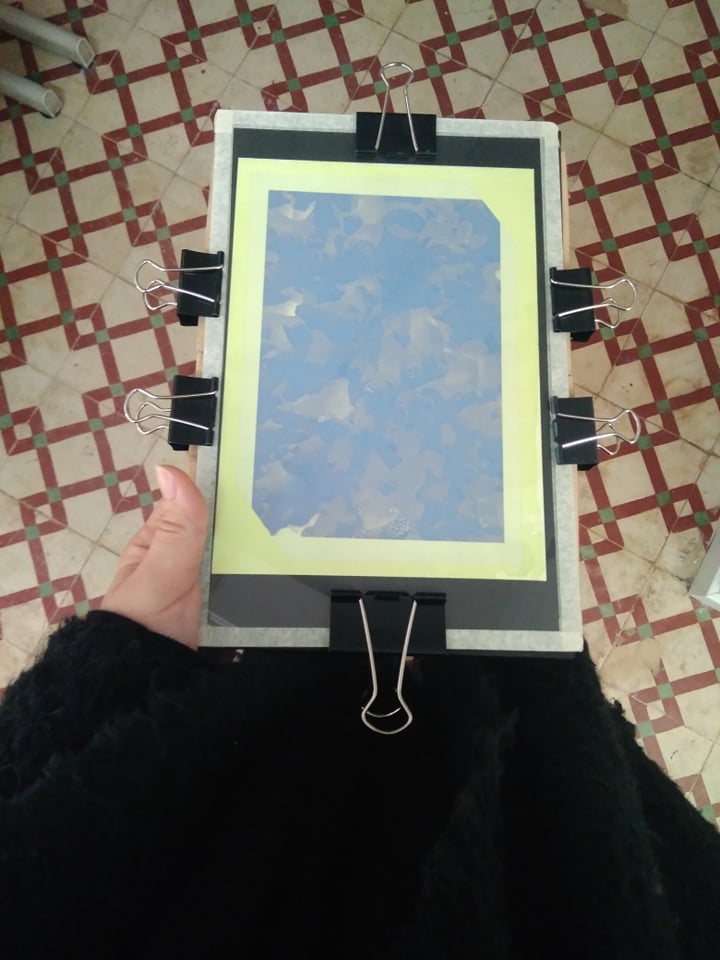
Wanna play some more? Or you just don’t like Prussian blue? We got you covered:
We called them: Turns (because they turn the colors into others)
The results vary but keep in mind that the possibilities, although many, result based on Prussian blue.
You can either whiten the image with a solution of sodium or ammonium carbonate
OR
Turn the colors a bit.
I can give you the ingredients I used, but it is easier and more exciting to say that anything that contains polyphenol, even if they are house items, like: green tea, black tea, coffee, wine, pomegranate and so on.
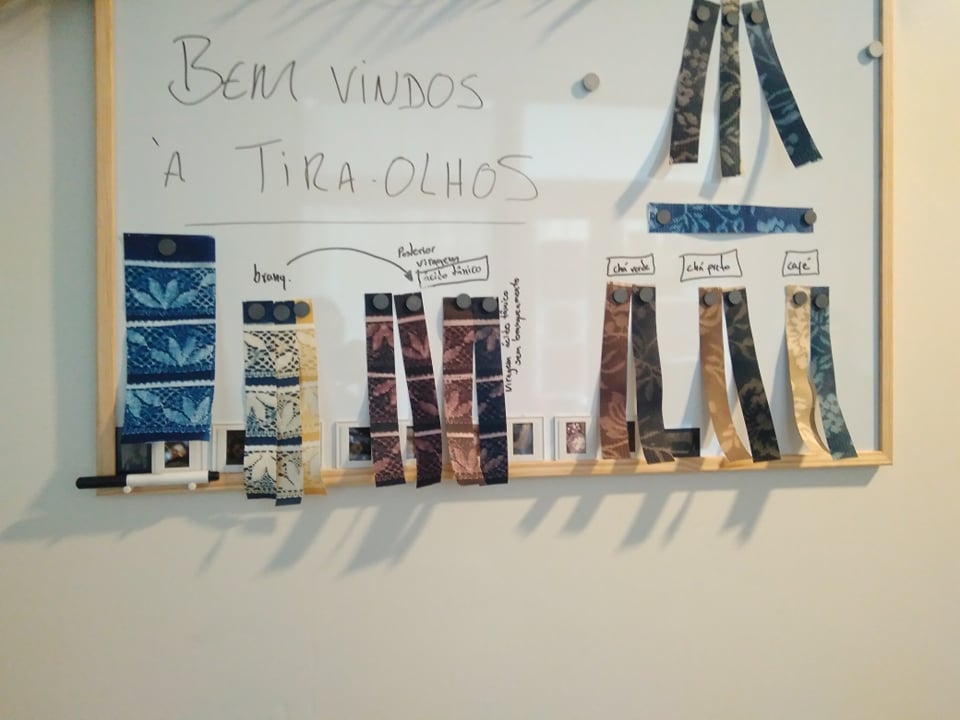
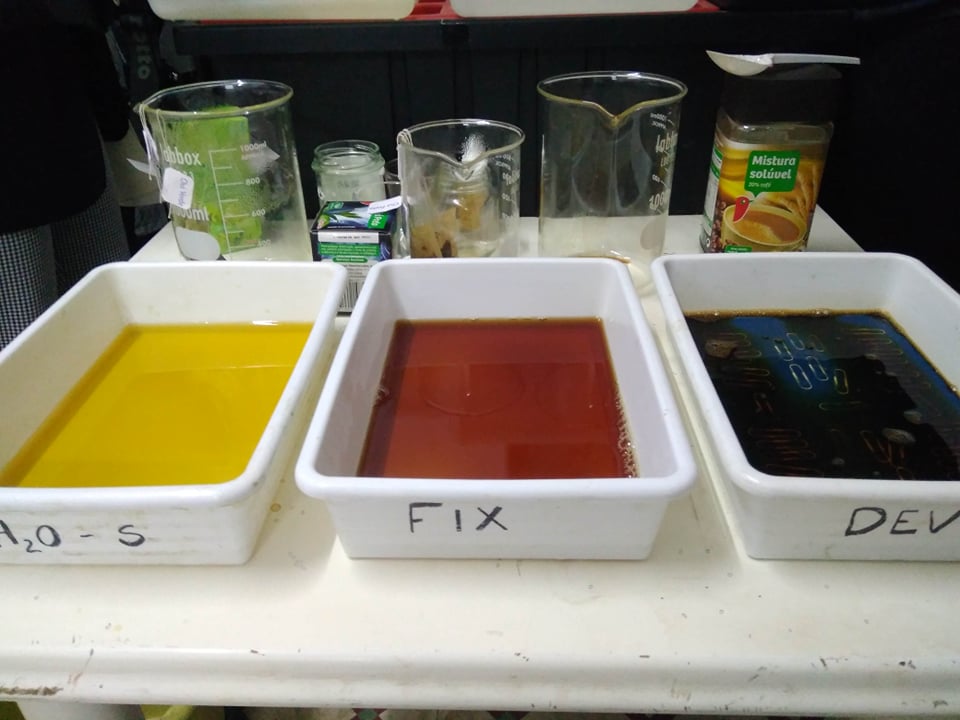
The beauty in this is that you don’t need to go just one way, you can whiten an image and the put it in coffe, go back to tea, and then pomegranate juice after. There are no rules. Altough i strongly advise that if you are using the acid or the whitener, do them first and carefully, since they are more expensive, don’t risk mixing them with coffee.
Hystorical Origin
Call them: Cyanotypes, blueprint process, ferroprussiate prints or iron prints.
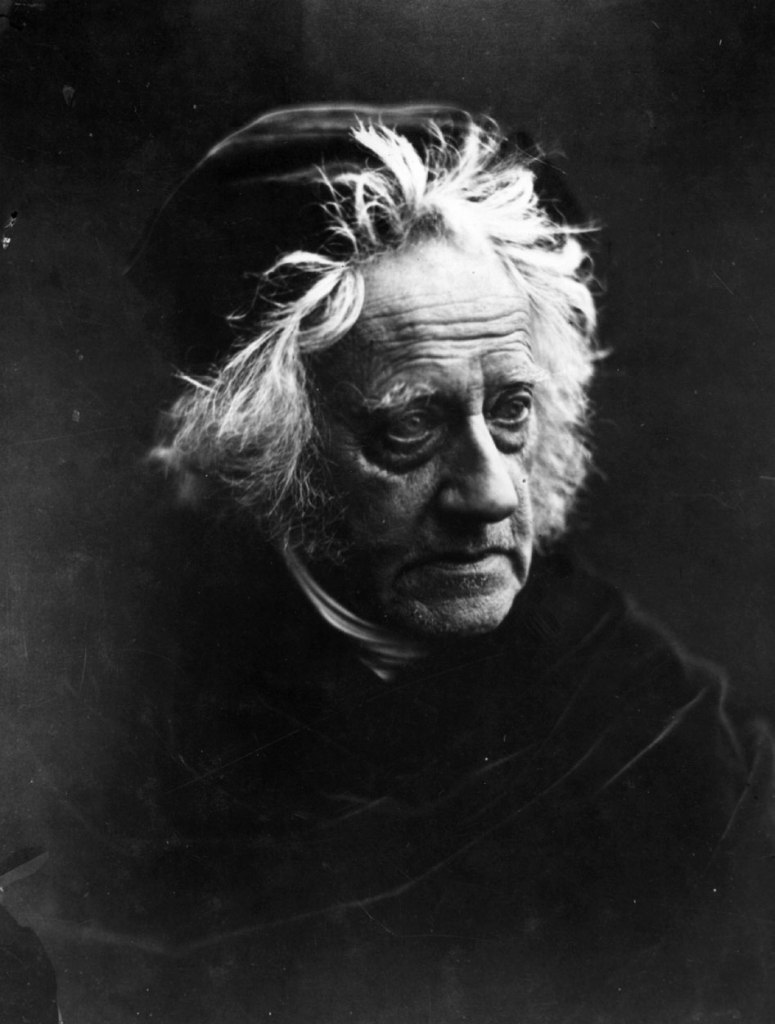
The inventor of the process was John Herschel (1792-1871), who found that ferric citrate could provide a light sensitive layer. This was discovered by the need Herchel had to copy his astronomy notes faster. Although this discovery happened 3 years after the discovery of photography, the process was renegaded, since blue prints were not appreciated at that time, while black and white was still being perfected. Even so, Sir Herchel was also the one who gave us the words (and concepts) of: positive and negative image; photography and snapshot.
John George Children’s daughter: Anna. She was passionate about science and often helped her father in chemistry, mineralogy and zoology. After marrying John Atkins, a wealthy mearchant, she had pleanty of time and money to pursue her passion for botany. She learned cyanotype with Sir John Herschel himself, she was also close to Henry Fox Talbot, since her father was heighbor to them.
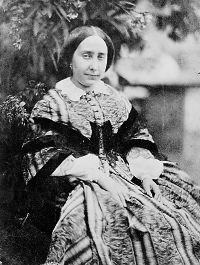
Science and Botany enthusiast, writer
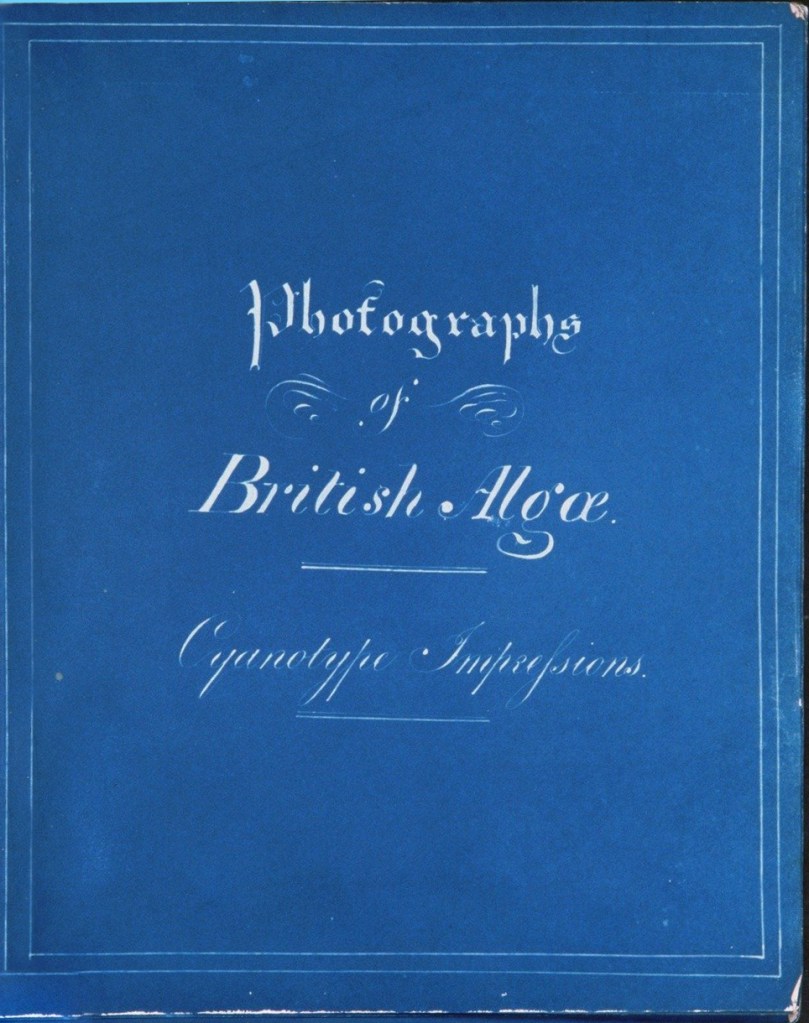
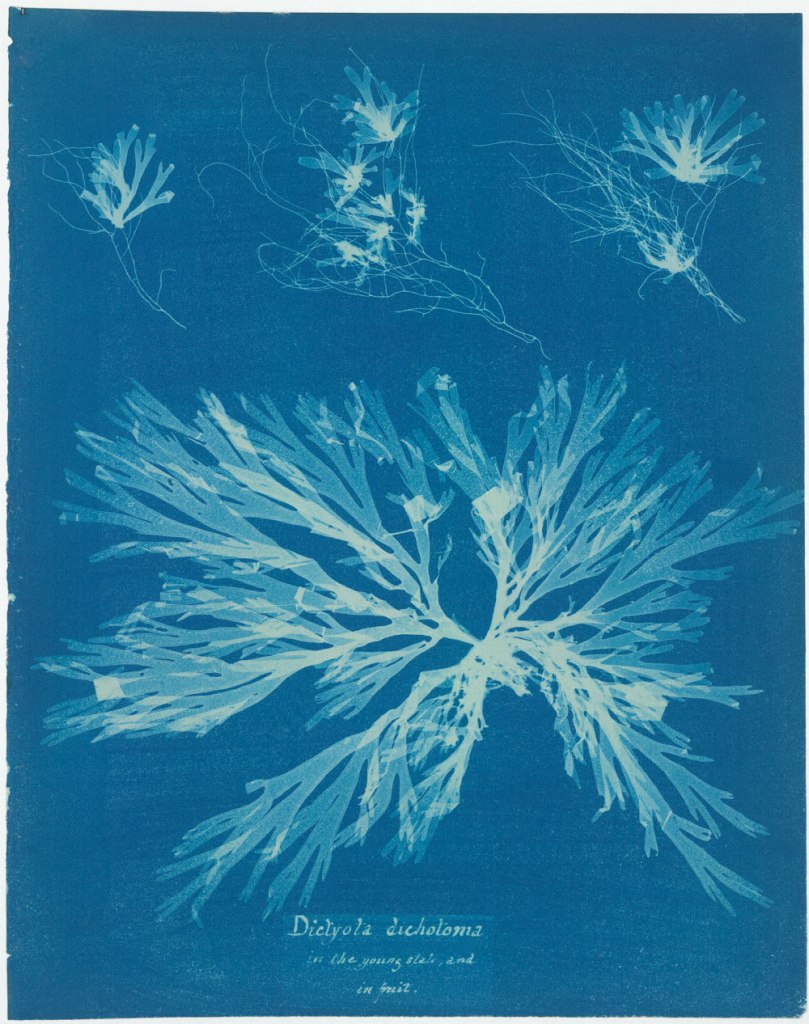
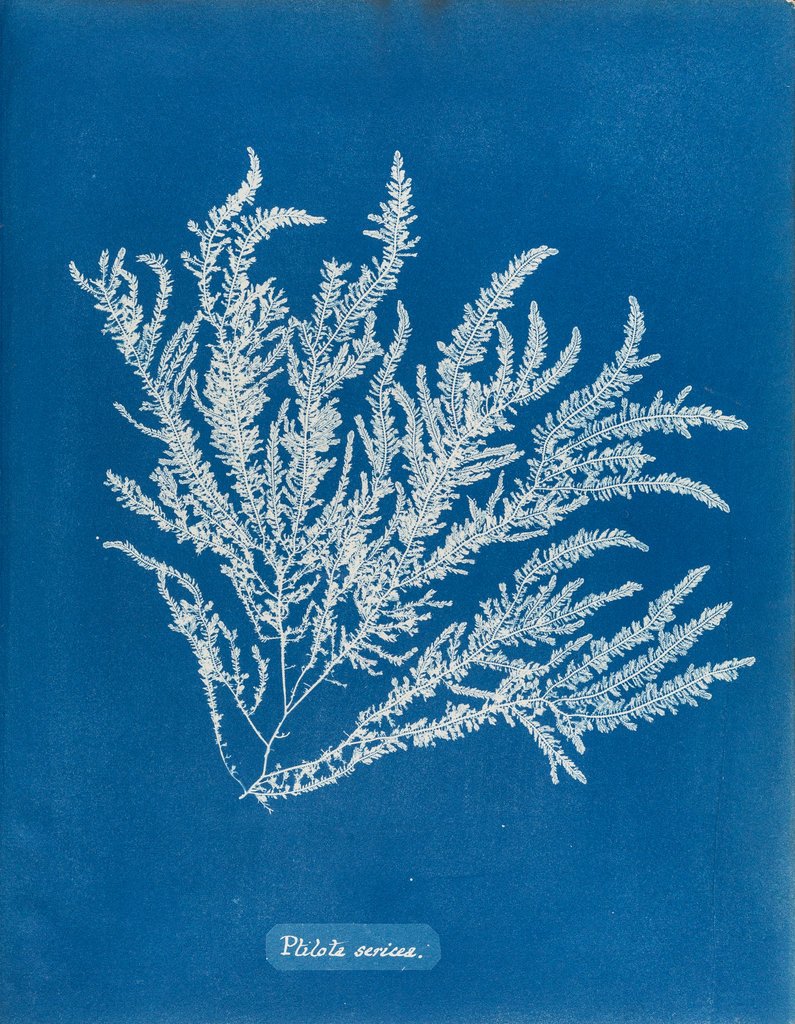
Anna Atkins (1799-1871) later produced and illustrated the book Photographs of British Algae: Cyanotype impressions (1843-1853) with this process as she felt that this one would better craw the detail in the algae she intended to show, also it was cheap and easier to fixate on paper. Each book was handmade. This was the first photographically illustrated book in history, it was also the one that made cyanotype famous.
My blue prints
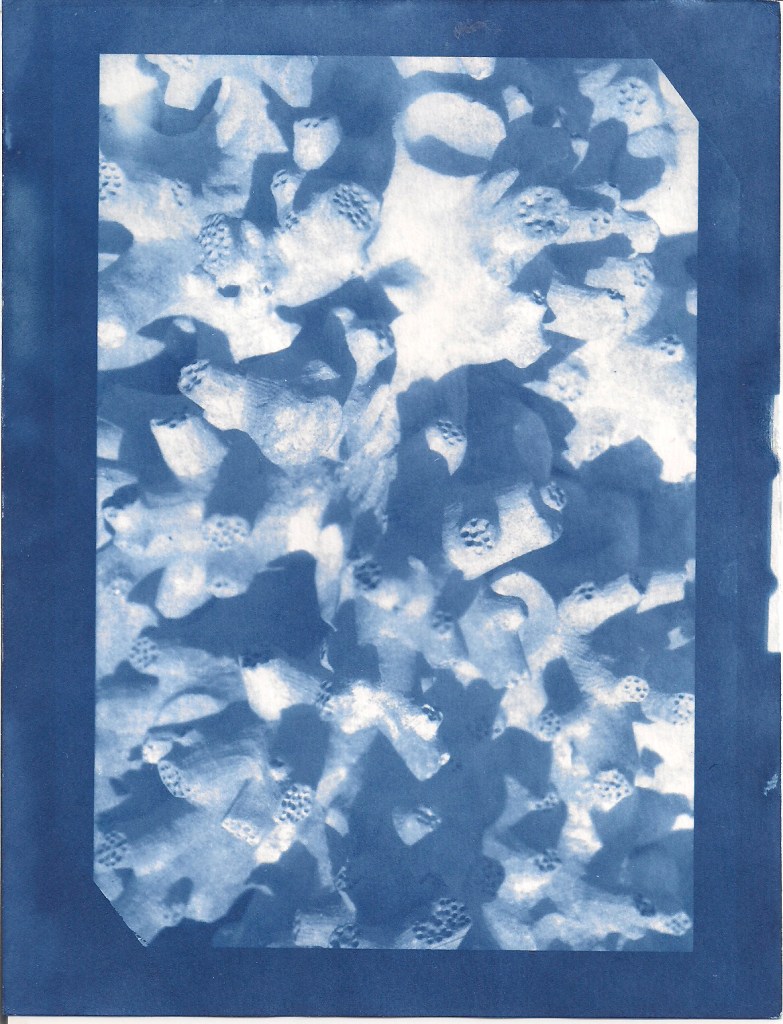
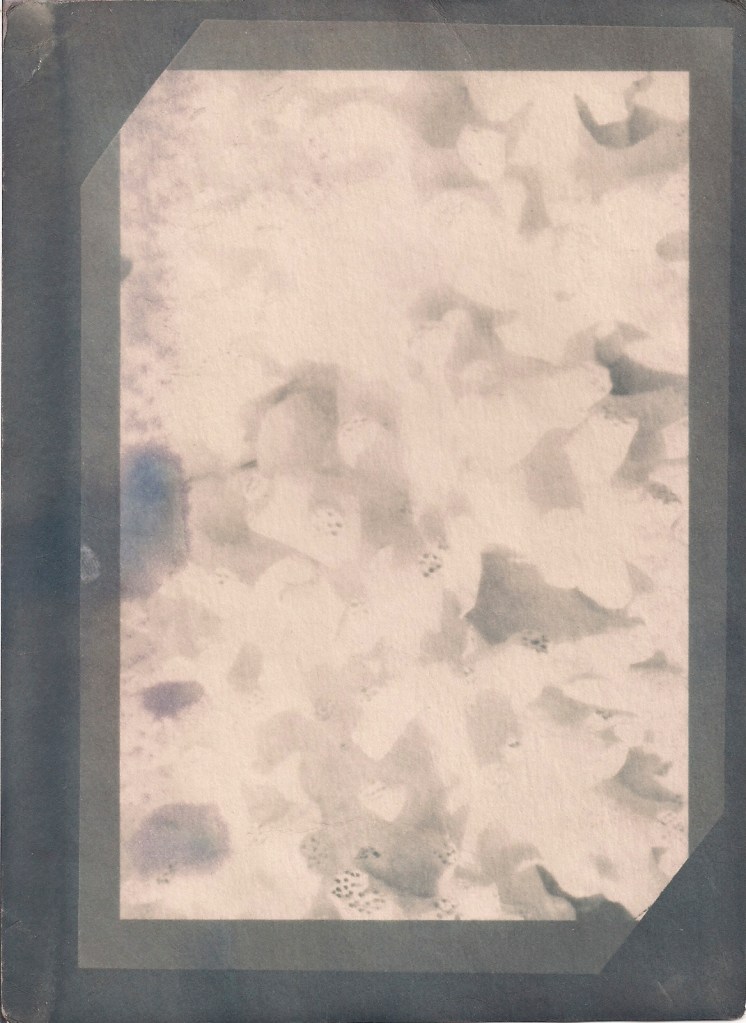
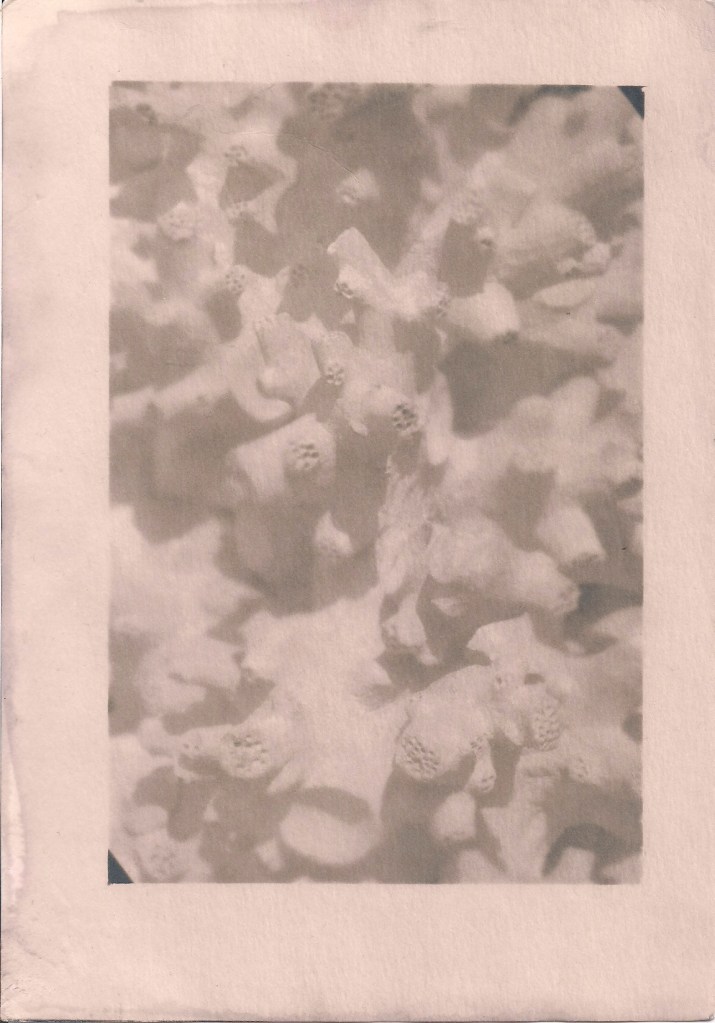
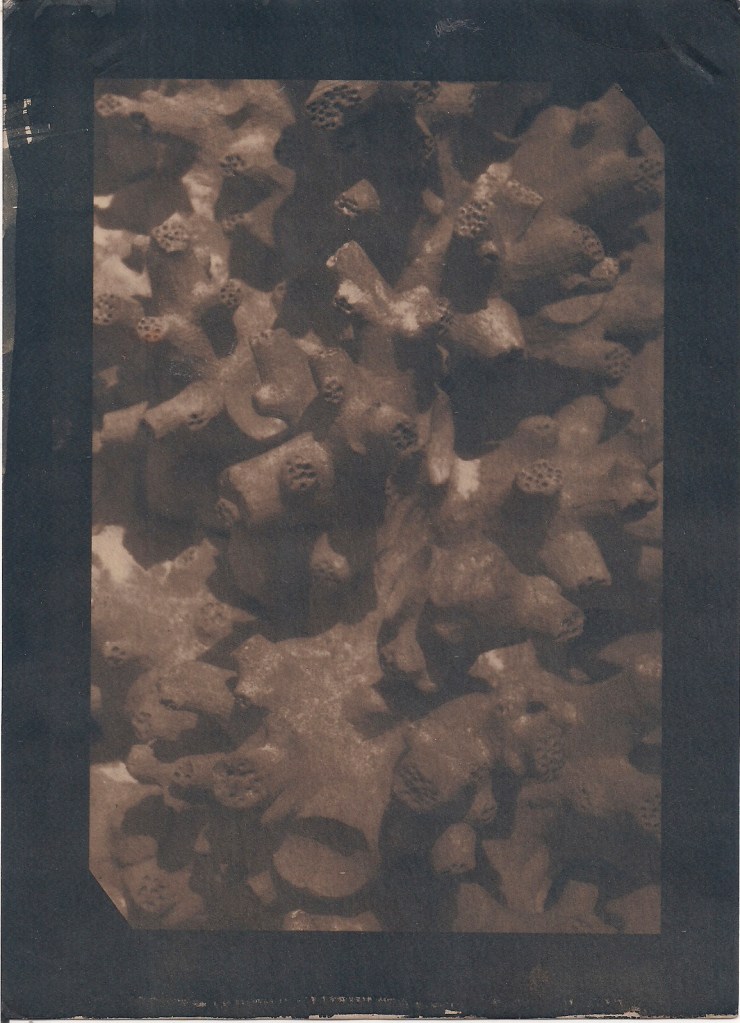
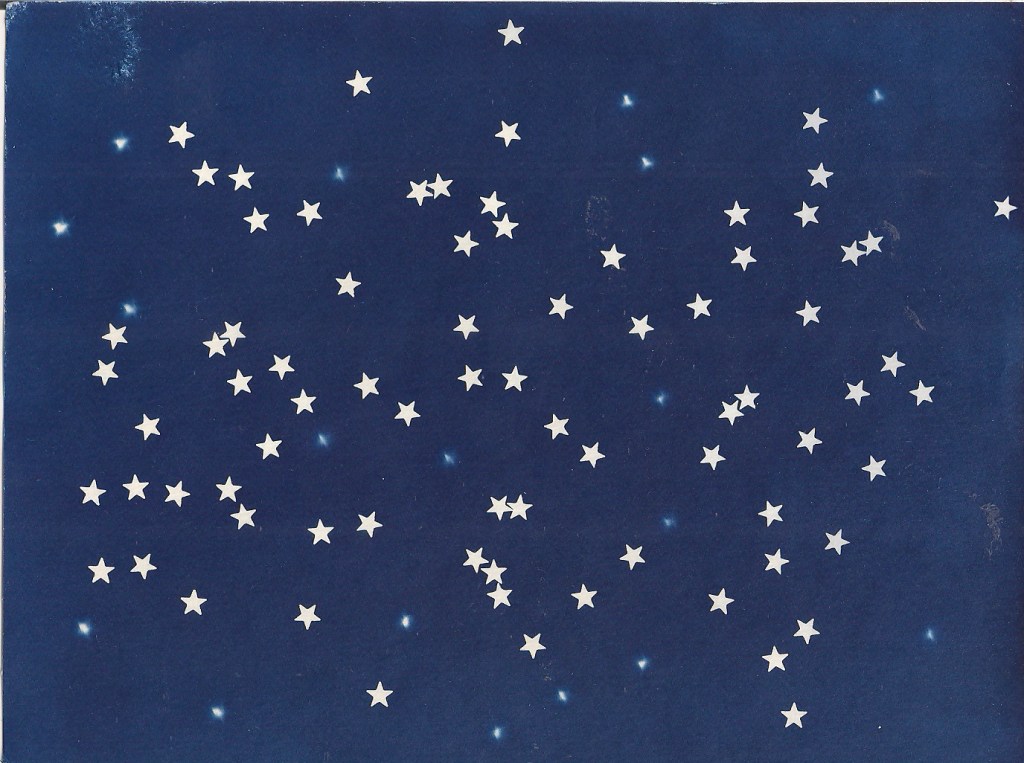
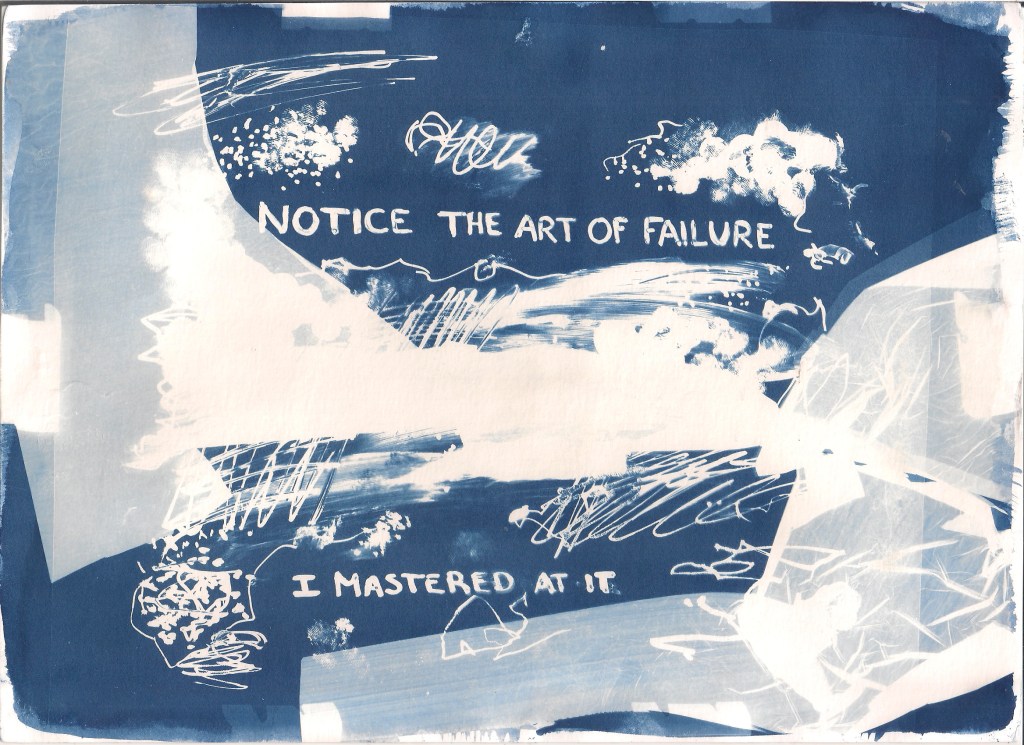
I have to confess i was having a hard day on this one. Everyting in the previous classes was going wrong, my personal life was an abomination (had none and people were getting mad at me for it), my job that pays my tuition was consuming me and i saw very clearly that i was not going to be able to balance everything. Also i keept seeing some injustices and unfair people hurting some others. So the whole thing resulted with be just being angry at the world, snapping with everyone and just giving up on doing everything.
The teacher did not allow that, thankfully. She pushed me into getting so distracted that as you can see i ended up doing a lot of pretty things. I feelt this was a very therapeutic class.
Also she gave me a passage of a photography book to read, that acctually made me laugh:
“Notes on the art of failure”
As the story goes, William Henry Fox Talbot sought to invent Photography because he couldn’t draw. Having failed at making a decent landscape using a camera lucida, he wished to get Nature to “paint itself”. Through years of trial and error, Talbot managed to produce some of the first lasting photographic images only to have his singular break-through trumped by the superior work of a better founded Frenchman. As more and more photo-Photographers began to stake their own claims, Talbot raced to show his earlier discoveries, but was thwarted by minor missteps and a summer of bad English weather. He barely eked out some flawed and faded photographs in time. Nevertheless, this was the birth of the Art.
If Photography was born from failure, then surely it must have always carried failure in its genes. Even as it laid claim to representing nature more perfectly than ever before, many of its earliest critics noted the odd and empty world despicted by the camera, or the deathly pallor and embalmed stare of its once-living subjects. As the technology grew faster, better and more detailed, the technological advances of Photography were matched by even greater critical and philosophical concerns over its connections (or lack thereof) to Truth and Reality, and it’s further politial uses in the world. The sharper the image, the more its meaning, as if it were simply getting better at hiding the magician’s sleight-of-hand under a pretense of objectivity.
Dan Estabrook
References
MacGee, S. (2010, February 7). Cyanotype history – John Herschel’s invention. Researched in December 4th, 2019 in: http://www.alternativephotography.com/cyanotype-history-john-herschels-invention/
Parallax Photographic Coop. (2017, July 12). How To Make Cyanotypes.
Researched in December 4th, 2019 in: https://parallaxphotographic.coop/how-to-make-cyanotypes/
The Public Domain Review. (s.d.). Cyanotypes of British Algae by Anna Atkins (1843).
Researched in December 4th, 2019 in: https://publicdomainreview.org/collection/cyanotypes-of-british-algae-by-anna-atkins-1843
 Lost Arc Prints