CYANOTYPES

This was one of my absolute favourites (wich is ironic since historicaly it was given less importancy). This one was the first not to use silver, it is also one of the simplest and cheapest ones I’ve ever heard of. Not even requiring the use of the usual revelatory chemicals.

It is also easily recognizable anywhere since it produces images in Prussian Blue, wich is a fun characteristic coming from the component used: Iron.

Let’s show and tell, shal we?

Materials:

  • Iron and Ammonium Citrate (20% concentration)
  • Potassium Ferricyanide (10% concentration)
  • Tap water
  • Hidrogen peroxide
  • Paper or fabric

So the specifics of this process come from the combination between the two first solutions metioned, which when combined turn into a green substance on the chosen surface that is really quite ugly, but once exposed to ultraviolet light turns into ferrous ammonium citrate and potassium ferricyanide, wich then forms iron ferricyanide, wich is what produces insoluble Prussian blue.
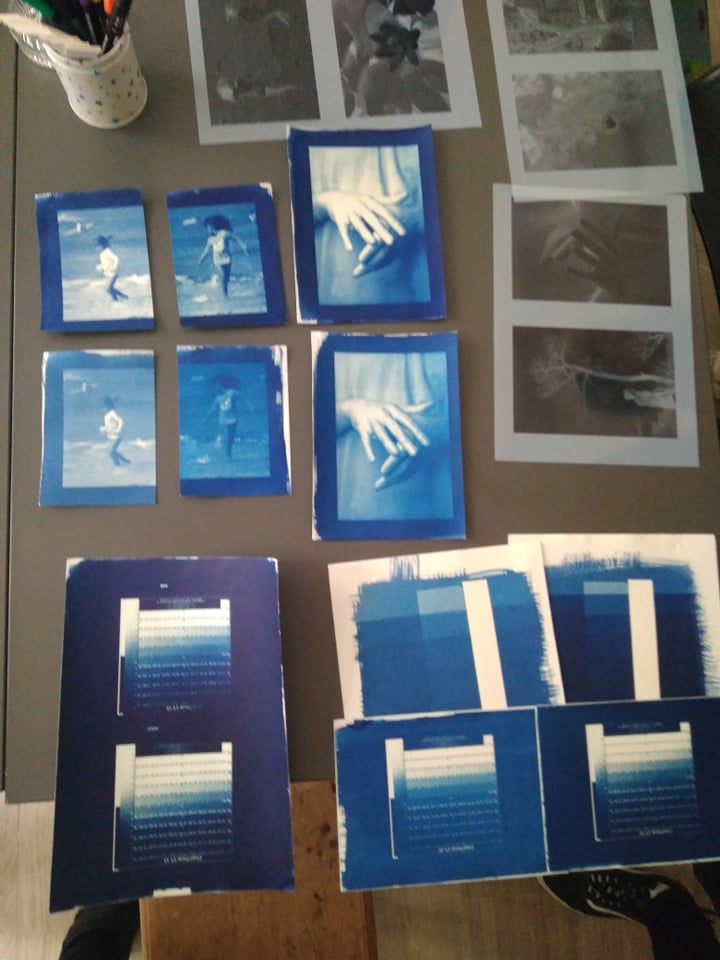
Image 1 – Color attempts and tests

When Prussian blue is formed, it is fixated on the paper and is not soluble in water, when on the other hand while it is just the chemichal (unexposed) it is. So it doesn’t need reveeling. All you need to do is put it in a box regular tap water and the unexposed areas will dissolve, and you have a beathiful Prussian blue clear image (also, soooo much cheaper and easier to do at home)

(I mentioned hydrogen peroxide before because it is a type of water that is cheap, you can buy in any convenience store and helps speed up the process of washing the green out of your image, you use it the same way has the regular water but the tiny bubbles it forms, mean that it is interacting with the none exposed iron and thus removing it faster)

So, cooking:

  • Mix the chemicals
  • But them on the surface chosen (with a brush, a spatula, whatever you would like to see)
  • Let it dry
  • Expose it (as a photogram or with a negative on top for a photographic image) in the sun light or any ultraviolet ligh
  • Take it of the press and put it inside a box of water while moving it around to make it faster
  • Put inside another box with hydrogen peroxide and watch the bubbles, once they stop, there is no more reaction and you can run it through water again (just a regular wash, you can even rub it)
  • Dry it out and that’s it!
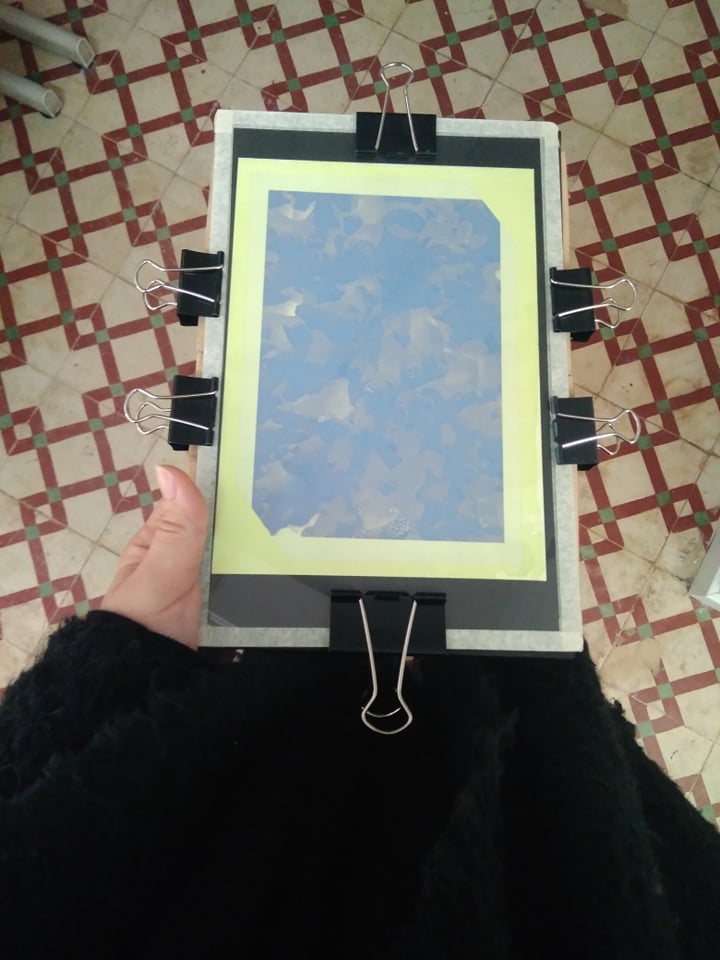
Image 2 – My greenish paper with my negative inside the press

Wanna play some more? Or you just don’t like Prussian blue? We got you covered:

We called them: Turns (because they turn the colors into others)

The results vary but keep in mind that the possibilities, although many, result based on Prussian blue.

You can either whiten the image with a solution of sodium or ammonium carbonate

OR

Turn the colors a bit.

I can give you the ingredients I used, but it is easier and more exciting to say that anything that contains polyphenol, even if they are house items, like: green tea, black tea, coffee, wine, pomegranate and so on.
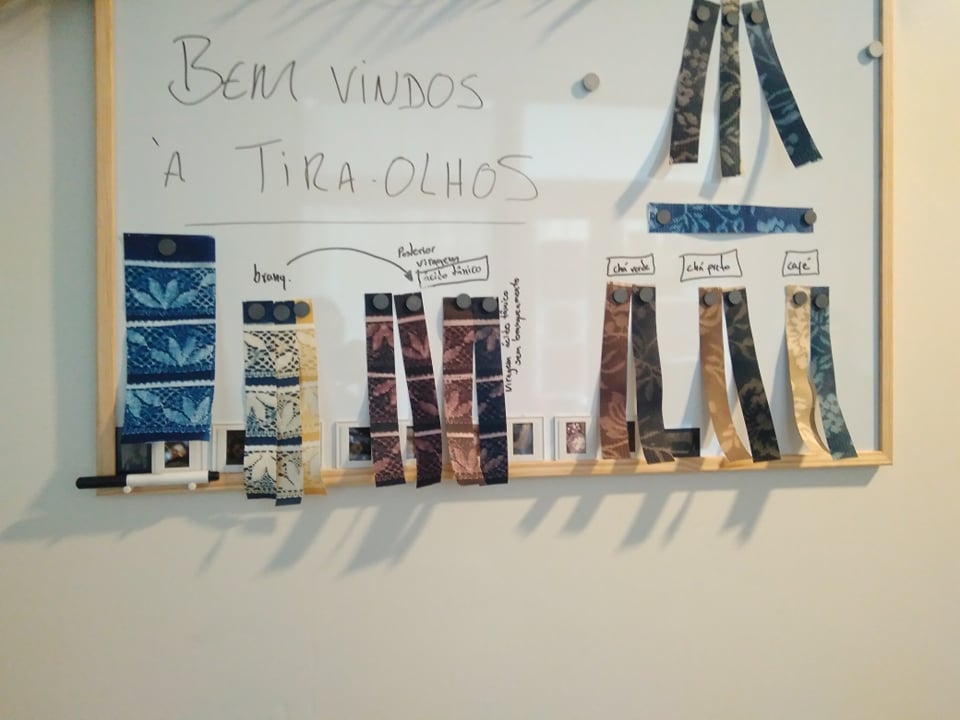
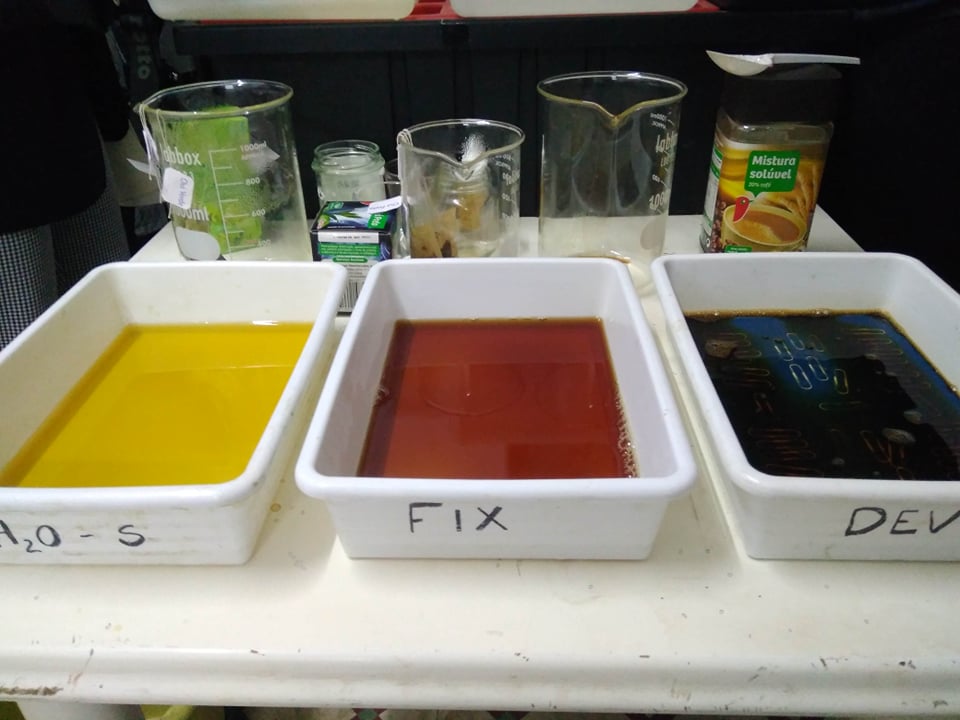
Image 3 – Turns possible with the materials we had (whitener, tannic acid, green tea, black tea and coffe, respectively)
Image 4 – The turning baths we used: green tea, black tea and coffee (the ID written in the boxes is wrong, of course)

The beauty in this is that you don’t need to go just one way, you can whiten an image and the put it in coffe, go back to tea, and then pomegranate juice after. There are no rules. Altough i strongly advise that if you are using the acid or the whitener, do them first and carefully, since they are more expensive, don’t risk mixing them with coffee.

Hystorical Origin

Call them: Cyanotypes, blueprint process, ferroprussiate prints or iron prints.
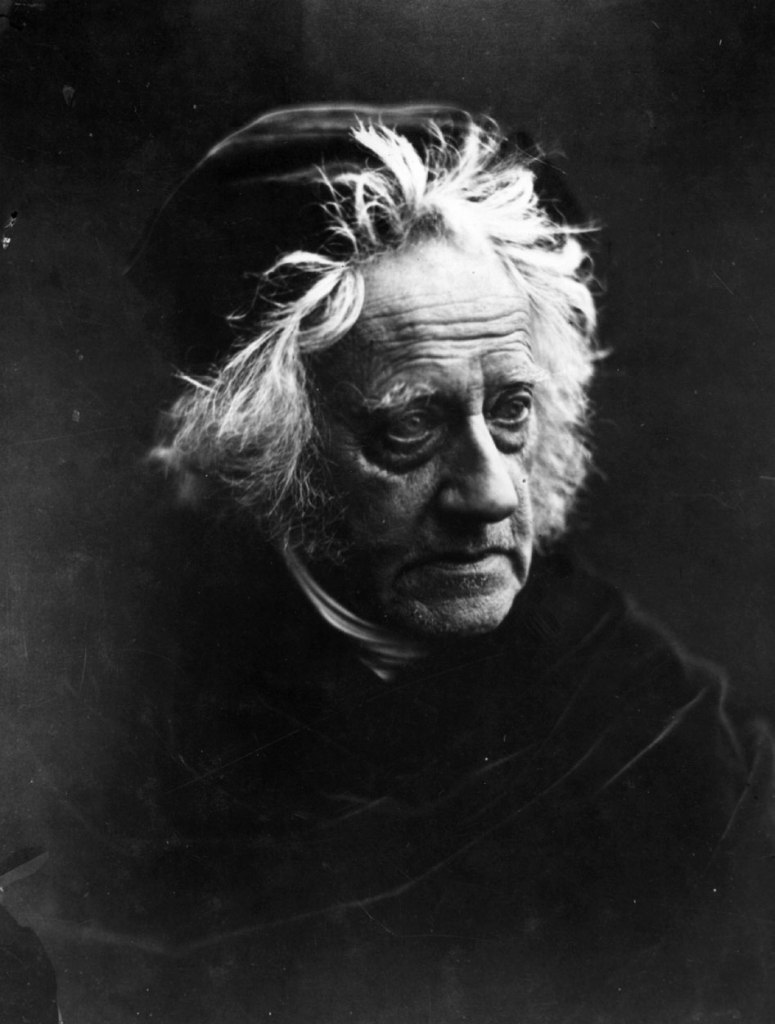
Image 5 – Sir John Herschel – English polymath, mathematician, astronomer, chemist, inventor and experimental photographer

The inventor of the process was John Herschel (1792-1871), who found that ferric citrate could provide a light sensitive layer. This was discovered by the need Herchel had to copy his astronomy notes faster. Although this discovery happened 3 years after the discovery of photography, the process was renegaded, since blue prints were not appreciated at that time, while black and white was still being perfected. Even so, Sir Herchel was also the one who gave us the words (and concepts) of: positive and negative image; photography and snapshot.

John George Children’s daughter: Anna. She was passionate about science and often helped her father in chemistry, mineralogy and zoology. After marrying John Atkins, a wealthy mearchant, she had pleanty of time and money to pursue her passion for botany. She learned cyanotype with Sir John Herschel himself, she was also close to Henry Fox Talbot, since her father was heighbor to them.
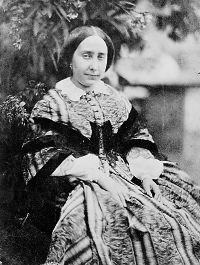
Image 6 – Anna Atkins –
Science and Botany enthusiast, writer

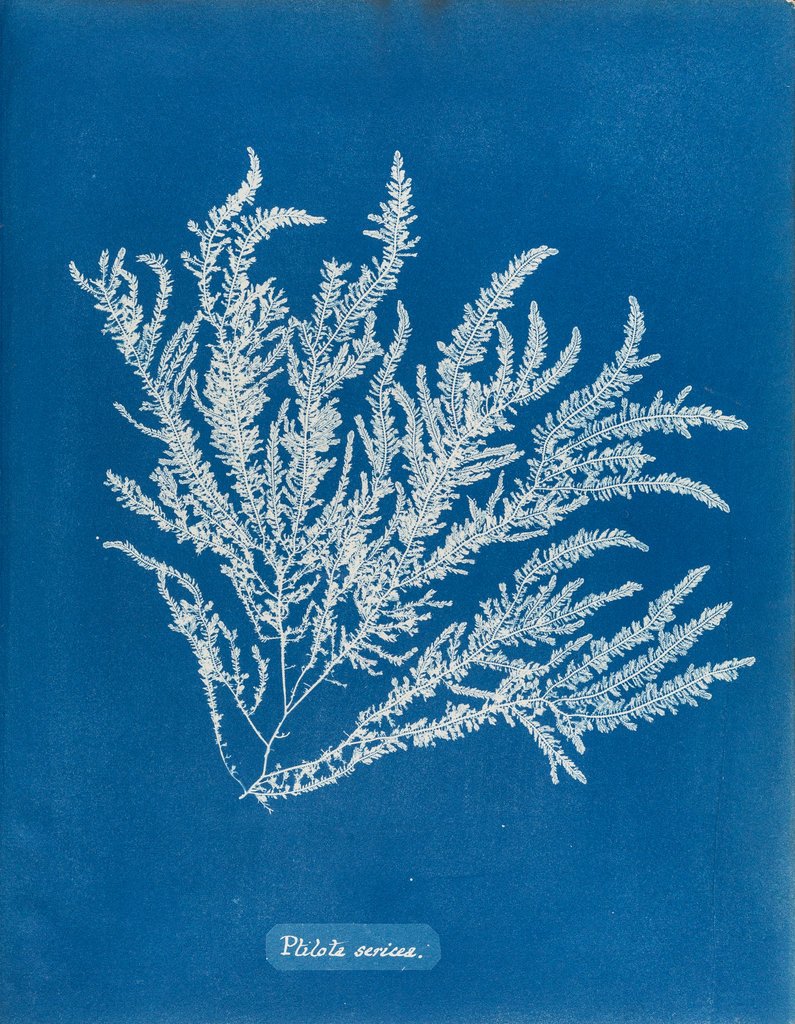
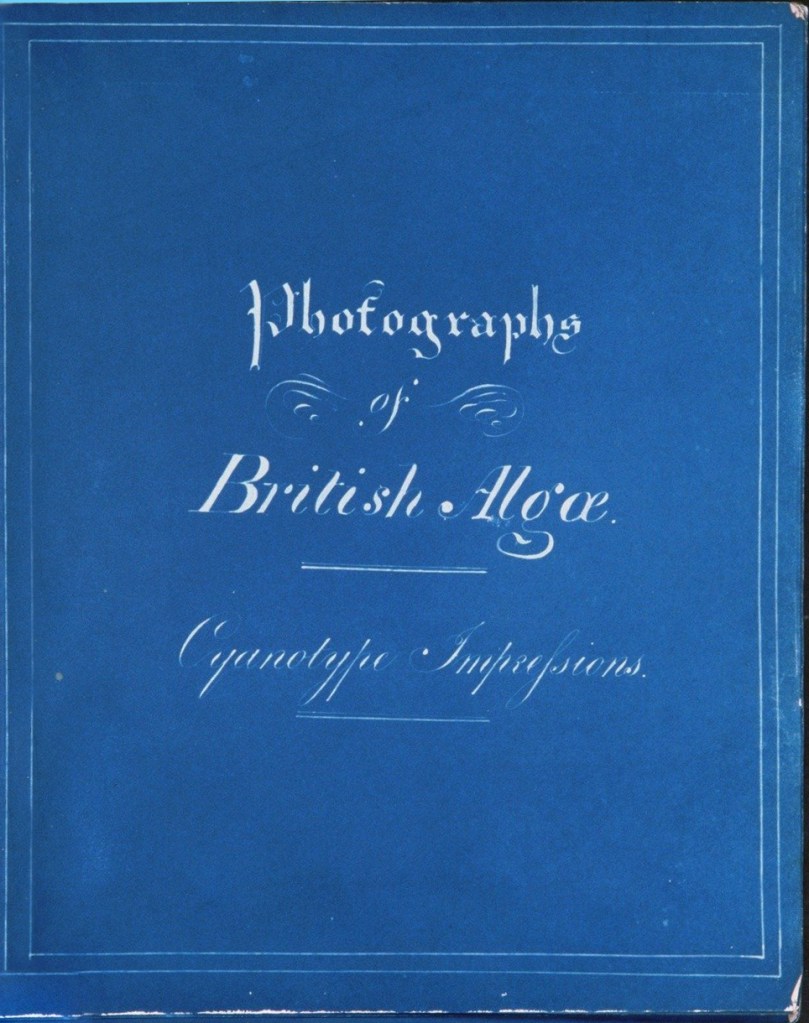
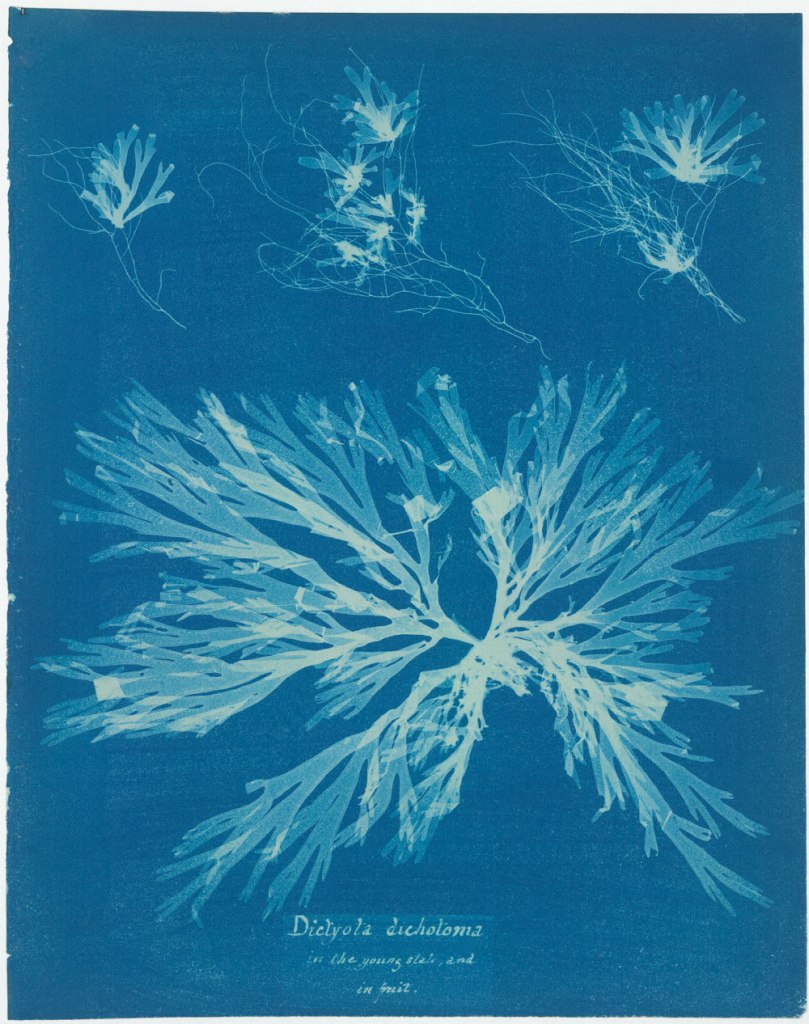
Anna Atkins (1799-1871) later produced and illustrated the book Photographs of British Algae: Cyanotype impressions (1843-1853) with this process as she felt that this one would better craw the detail in the algae she intended to show, also it was cheap and easier to fixate on paper. Each book was handmade. This was the first photographically illustrated book in history, it was also the one that made cyanotype famous.
My blue prints
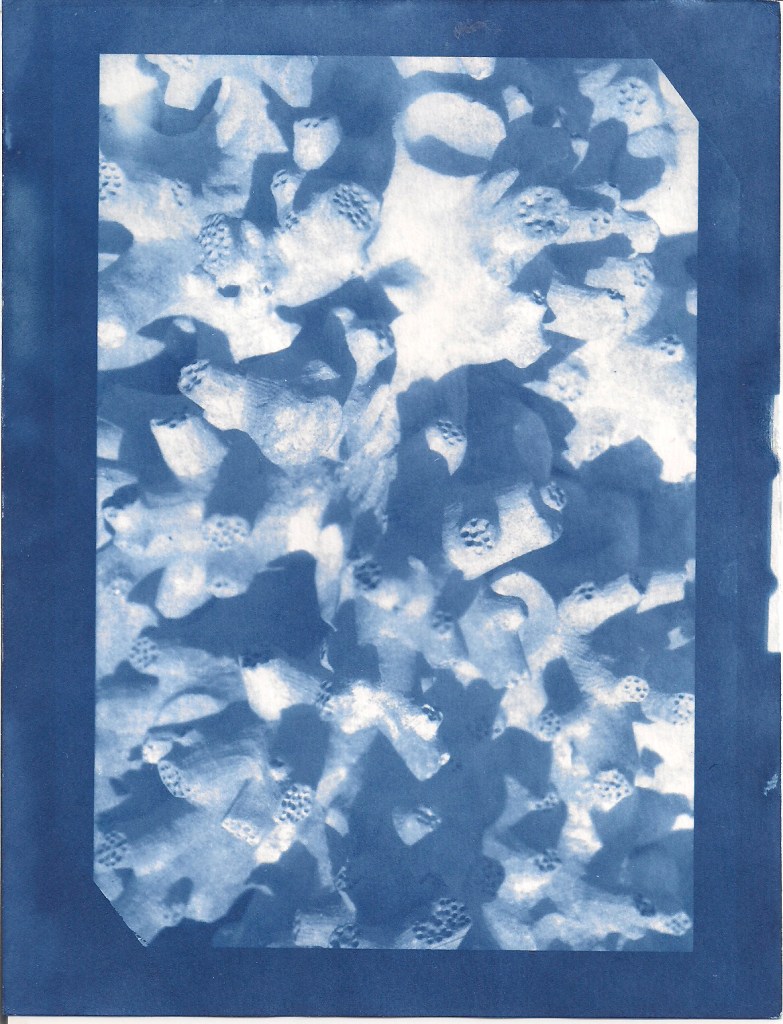
Image 7 – My Anna Atkins inspired blue print, in beauthiful prussian blue, washed with water. Nice contrast and detail in my opinion.
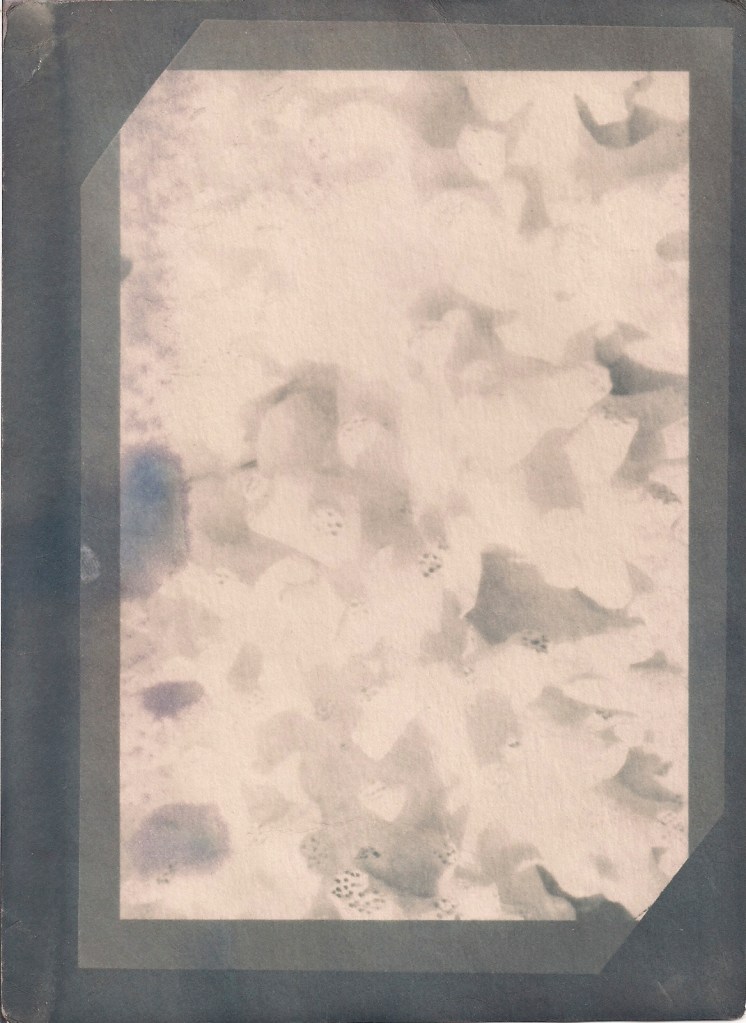
Image 8 – One of my first turnes, that turned into disaster. This image had a lot of white in it while it was still blue and i tried to whiten it for like 3 seconds and it almost faded. I put it in coffee afterwards to try and regain some dark areas. Really bad contrast of course, also bad detail, also a blurr in the left central side, and no detail at all.
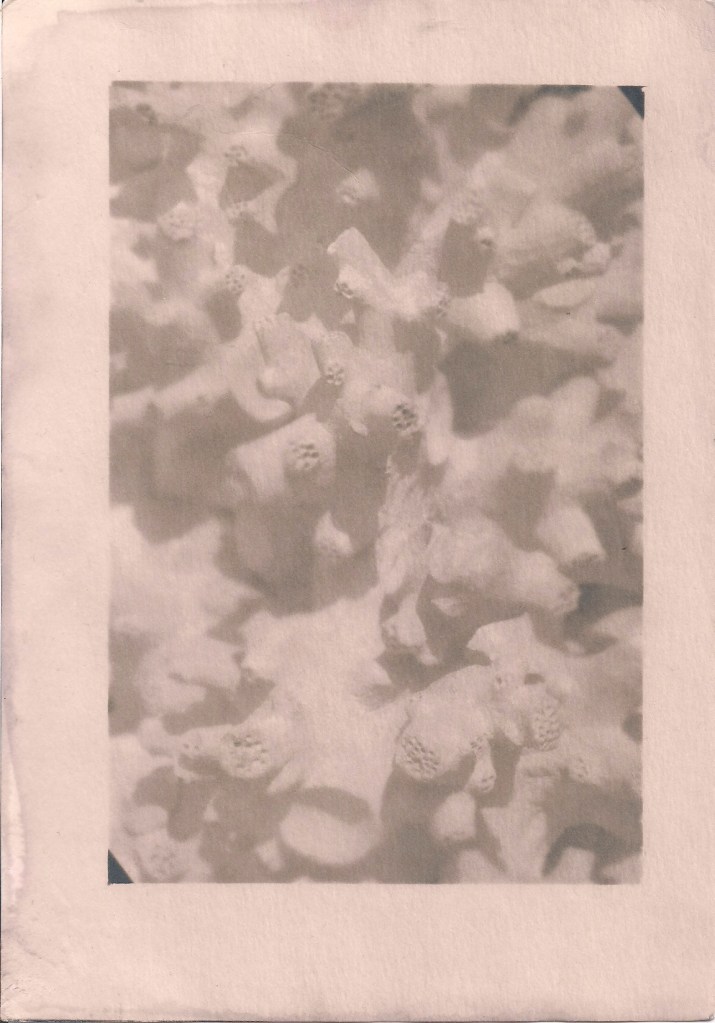
Image 9 – On this one i used a frame (made out of card board) to only expose the image and not the borders. And then i turned it with tannic acid and green tea. I liked the pinkish look, although the details are really bad because the press was not properly held together when it went into the sun, and i lost a lot of contrast.
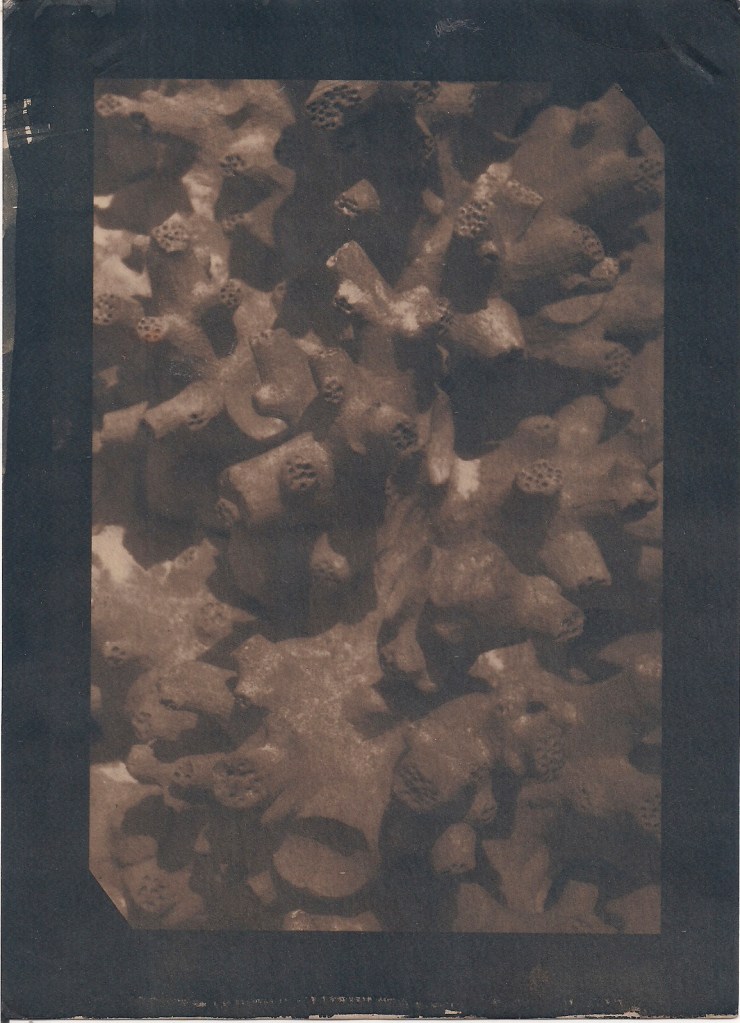
Image 10 – So this one had no frame, acid or whitener or what so ever. I just moved it around between coffee and black tea. Literally back and forwards. And i absolutely love this one, the contrast, the almost black frame, the detail, the white spots, the whole thing.
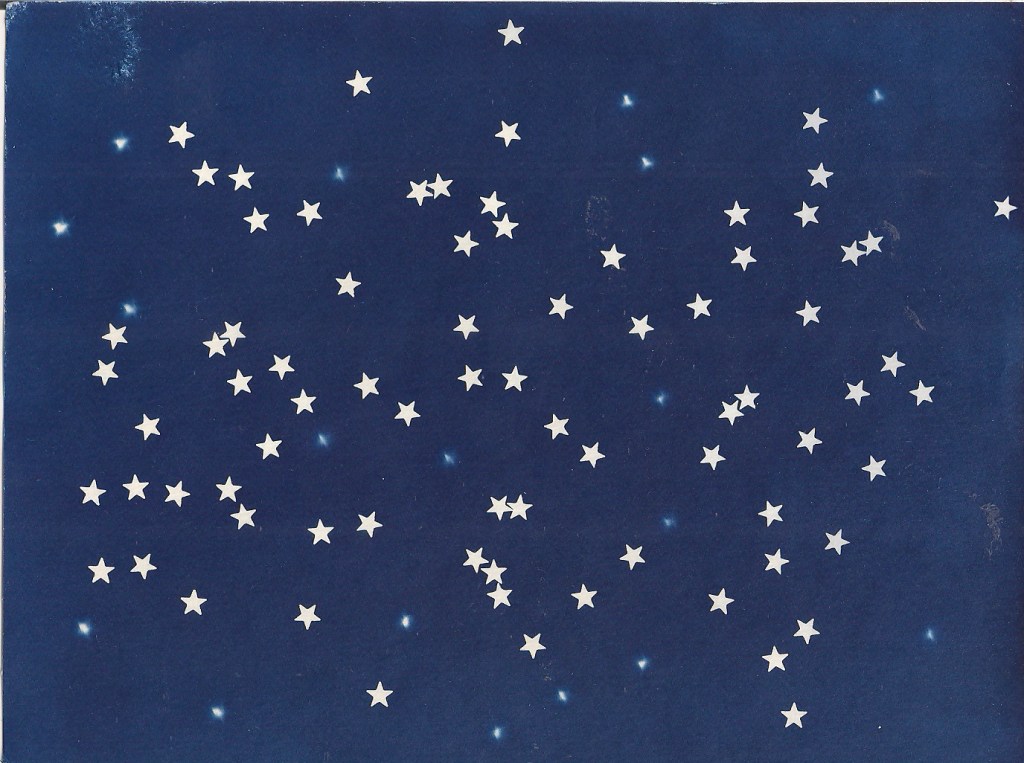
Image 11 – This was my playing with makeup from a colleague, so i just exposed a paper with the little cut stars under and over the glass in the press and it resulted in this. I loved it so much in blue that i didn’t want to turn it. And also, this contrast, perfect blue and perfect white.
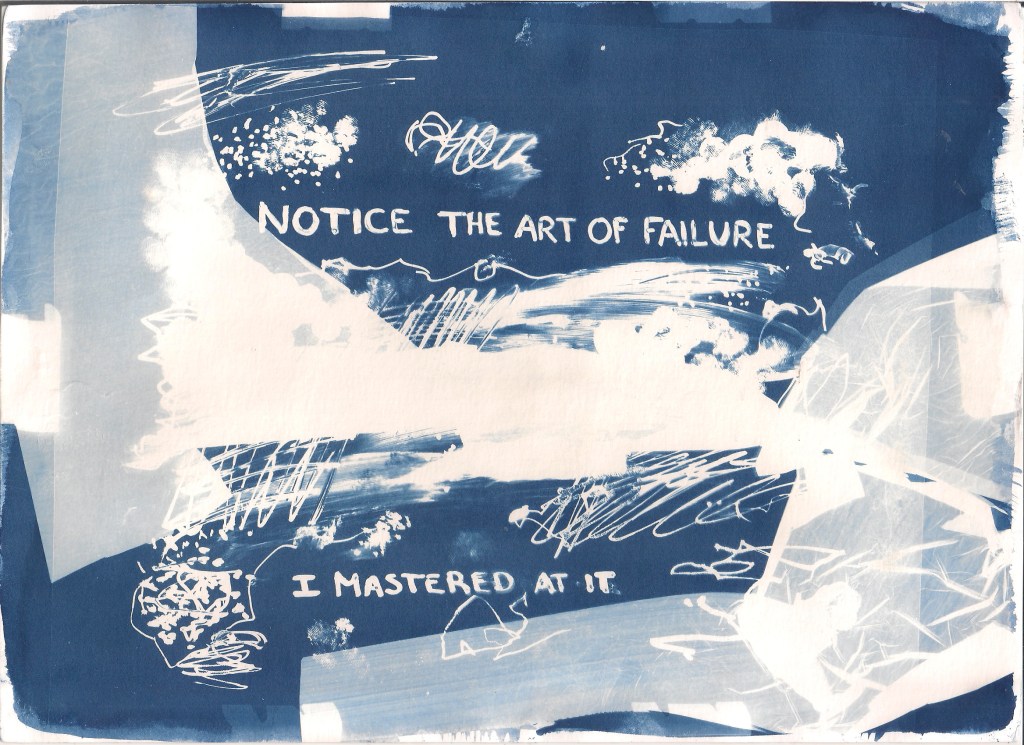
Image 11 – This fellow was made by yours truely in a moment of despair with life, by scribbling with a green pen on a piece of acetate paper (it was the teachers idea, not mine) and then putting it in a press exposing with a bunch of random pieces of plastic i found laying around (whiter areas in the top left and lower right corners)

I have to confess i was having a hard day on this one. Everyting in the previous classes was going wrong, my personal life was an abomination (had none and people were getting mad at me for it), my job that pays my tuition was consuming me and i saw very clearly that i was not going to be able to balance everything. Also i keept seeing some injustices and unfair people hurting some others. So the whole thing resulted with be just being angry at the world, snapping with everyone and just giving up on doing everything.

The teacher did not allow that, thankfully. She pushed me into getting so distracted that as you can see i ended up doing a lot of pretty things. I feelt this was a very therapeutic class.

Also she gave me a passage of a photography book to read, that acctually made me laugh:

“Notes on the art of failure”

As the story goes, William Henry Fox Talbot sought to invent Photography because he couldn’t draw. Having failed at making a decent landscape using a camera lucida, he wished to get Nature to “paint itself”. Through years of trial and error, Talbot managed to produce some of the first lasting photographic images only to have his singular break-through trumped by the superior work of a better founded Frenchman. As more and more photo-Photographers began to stake their own claims, Talbot raced to show his earlier discoveries, but was thwarted by minor missteps and a summer of bad English weather. He barely eked out some flawed and faded photographs in time. Nevertheless, this was the birth of the Art.

If Photography was born from failure, then surely it must have always carried failure in its genes. Even as it laid claim to representing nature more perfectly than ever before, many of its earliest critics noted the odd and empty world despicted by the camera, or the deathly pallor and embalmed stare of its once-living subjects. As the technology grew faster, better and more detailed, the technological advances of Photography were matched by even greater critical and philosophical concerns over its connections (or lack thereof) to Truth and Reality, and it’s further politial uses in the world. The sharper the image, the more its meaning, as if it were simply getting better at hiding the magician’s sleight-of-hand under a pretense of objectivity.

Dan Estabrook

References

MacGee, S. (2010, February 7). Cyanotype history – John Herschel’s invention. Researched in December 4th, 2019 in: http://www.alternativephotography.com/cyanotype-history-john-herschels-invention/

Parallax Photographic Coop. (2017, July 12). How To Make Cyanotypes.
Researched in December 4th, 2019 in: https://parallaxphotographic.coop/how-to-make-cyanotypes/

The Public Domain Review. (s.d.). Cyanotypes of British Algae by Anna Atkins (1843).
Researched in December 4th, 2019 in: https://publicdomainreview.org/collection/cyanotypes-of-british-algae-by-anna-atkins-1843
HISTORY OF EXPERIMENTAL PRINTS

(The shortest verison I was able to create)

So we started this shcool unit with it’s logical birth, history.

But alow me to begin with a conclusion: Photography doesn’t have just one story but serveral that converged, although their starting point had it’s origin in mutiple country with distinct influences.

“But someone has to have been the first, someone had to beat someone else to it”. Well, oppinions diverge on this matter. But let’s all agree that photography needs 3 things, and only these 3 to exist:

  1. Light
  2. Object
  3. Photosensitive material

So, since that light and objects exist since the dawn of time. We can say that photography started by him who created photosensitive material to print on, thus recording what we see has it is, and not the first camera holder has you would think.

This is why the history of photograpy always shifted between assuming the documental value of images, as a way to just record reality and the way in wich diferente ages put their artistic toe into it, throughout the experience of creating something.

Having said this, there were countless experimental attempts to find photosensitive materials to produce what were originally called “photogenic drawings” meaning drawing created by light. These attempts pre-dated the existance of cameras and pretty much worked by: coating commonly available materials such as glass, metal, paper and even leather with light-sensitive chemicals.

The first chemically photographic process can be considered a photogram.

Important names in the history of printing

Johann Heinrich Schulze (1687-1744) –  German physicist and professor of anatomy and medicin, found that silver nitrate in a jar, when left exposed to sunlight, turned dark on the side facing the window. After exposure, if the bottle was shaken, fresh silver nitrate replaced the exposed material near the glass surface. Schultze first demonstrated that this action was caused by light and not by heat. Schultze’s experiment failed to result in a permanent image because exposure to light continued to change the unfixed silver.

Thomas Wedgewood (1771-1805) – Chemist, physicist and son of the potter and industrialist, Josiah Wedgewood. By experimenting with chemicals in his father’s shop was able to produce only temporary images. He is known to have produced designs on leather, glass and ceramic items. Wedgewood called these images “sun prints” a term that has survived until today. His work also failed to produce permanent images due to his inability to fix the image.

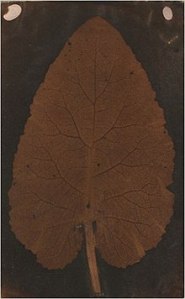
Leaf -
It is believed to have been photographed by Wedgewood for several reasons, one of them the W letter on the right upper corner of the image. Although it is a controversial matter, it is one of the first photograms in history.
Salted paper photogram of a leaf, circa 1839.
A speculative attribution to Wedgwood in 2008 was later retired. Although this is a controversial matter, it is one of the first photograms in history.

“No attempts have been made to prevent the uncolored parts of the copy or profile from being acted upon by light have yet been successful”

Thomas Wedgewood

 “The copying of a painting, or the profile, immediately after being taken, must be kept in an obscure place. It may indeed be examined in the shade, but, in this case, the exposure should be only for a few minutes, by the action of candles or lamps, as commonly employed it is not sensibly affected.”

Humphrey Davy

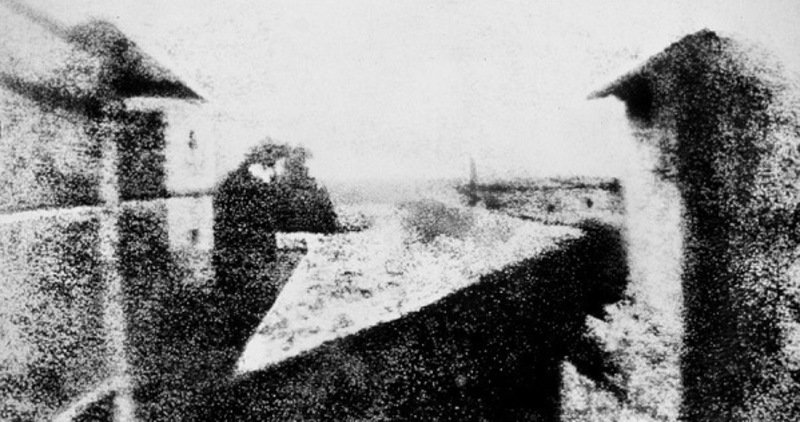
Joseph Nicephere Niepce, in France, in 1824 created a recorded image of a drawing by coating a sheet with Bitumen of Judea, a type of asphalt. By exposing through the drawing, and washing off the soft unexposed asphalt resulted in a photogram copy of the drawing. Niepce continued to explore ways to improve his process without significant success. He abandoned the concept and experiments and later worked with Louis Jaques Mande Deguerre on the Daguerreotype process.

Joseph Niepce – Point de vue du Gras, 1826/1827
The photography took 8 hours of exposure to sunlight.

William Henry Fox Talbot (1800-1877) – English scientist and mathematician, while traveling in Italy in the early 1830’s used a camera lucida (a portable camera obscura) to draw nature and because of the difficulties in detailing various subjects, he decided to investigate the use of photography as a way to capture the details.

Talbot began investigating the properties of silver salts in mid-1834 and in 1835 and part of the process was to expose to sunlight until an image appeared, followed by washing the print in salt solution under low level of light, resulting in a relatively permanent image.

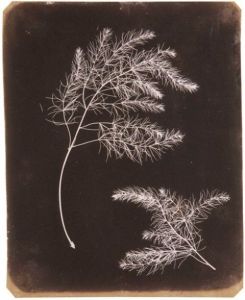
Fox Talbot – Aspargus Foliage, 1840’s

Talbot used the term Calotype from the Greek “calos” meaning beautiful” to describe these images. Talbot was the first person to expose sensitized paper in a camera. Since film was unknown at the time, Talbot oiled the paper to make it transparent and this “negative” was used to produce a positive by contact printing through the oiled paper. Talbot is considered the first person to create a photographic process that produced a negative that could be converted into a positive image.

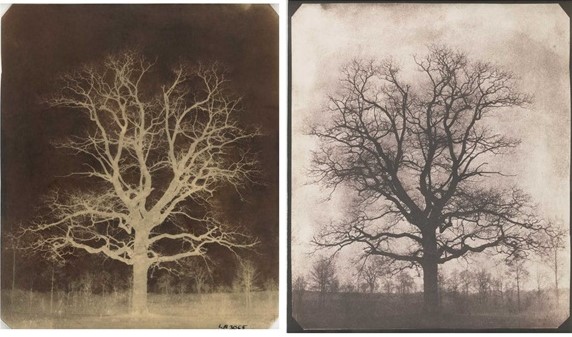
William Fox Talbot – An oak tree in winter, 1842-1843

He was also the first to manage to fix his photograms, in the salted paper, so his photogram images were the first to survive to this day.

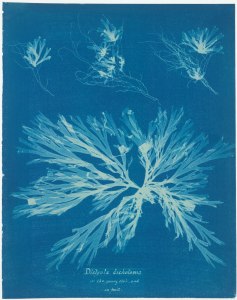
We also owe a great deal to Anna Atkins (1799-1871). Anna, was born in Kent and spent her childhood in the presence of many of the leading English chemists. She helped her father in scientific endeavors. Also, Herschel and Talbot were friends of Anna’s father and thus Anna knew early on about the cyanotype and Talbot processes for creating images. Anna later used the process of making cyanotypes to produce detailed images of botanical specimens, he then used these to illustrate her book entitled “British Algae: Cyanotype Impressions”. This was the first book that was illustrated using photography.  

Anna Atkins – Cyanotype: Dictyola Dicholoma, 1843.
Printed and published Part I of “British Algae: Cyanotype Impressions” in 1843 and in doing so established photography as an accurate medium for scientific illustration.

She learnedn cyanotype and photogenic drawings cooresponding with Fox Talbot and John Herschel. Herschel was a scientist, inventor and astronomer. He invented the cyanotype in 1842 by observing the photosensitivity of ferric salts. He also discovered that sodium thiosulfate would “fix” images and essentially stop images from fading with further exposure to light. The cyanotype became an important and popular method for producing images during the 19th and 20th centuries because of the ease of coating the paper with photosensitive solution and because the image can be developed using water.

The cyanotype process is very permanent and many of the photograms produced in the mid-1800s survive today.

As the method was perfected throughout time, it started to be used has a mein of art. In this fase i should like to give some final, but special attention to one who was one of the biggest influences in one of my all times favourite photographer.

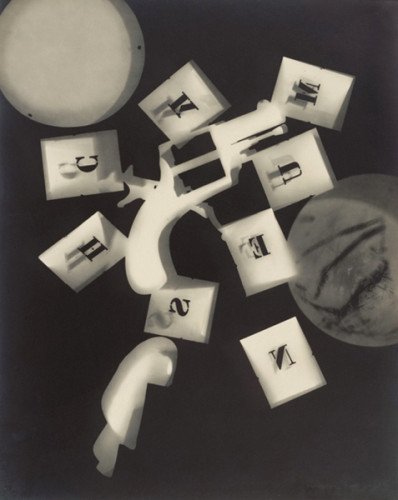
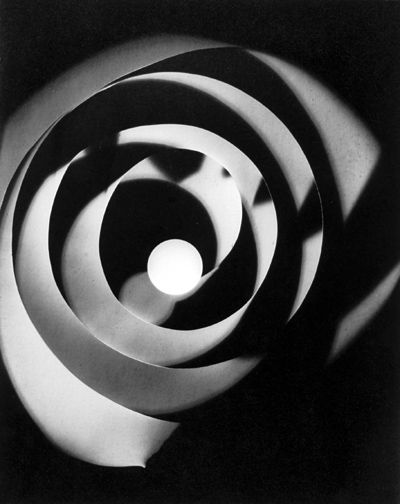
Man Ray (1890-1976) – This american was one of the founders of the Dada movement (anti-art, ilogical and absurd), alogside with Michael Duchamp. In 1921. In Paris he comes across surrealismo (wich had a strong influence on Freud psicoanalisis, has enphatised the role of the subconsciente in creative activities) and becomes influente in the movement. Man Ray developed lots of experimental works, in techniques such as: Sabatier efect, photograms, multiple exposures and original techniques in photosensitivity and photographic prints.

The process and evolution of photograms is fascinating and experimental, so is it’s own process. Despite the interest, more than everything, the history just made me very curious on how to actually make a photogram or a sun print. Because, the concept seems rather simple, but the time that took for it to develop must require some skills wich i do not, yet, have.

References

Godinho, Maria Margarida A.f. Medeiros M. (2016). Fotogramas : Ensaios sobre fotografia. 1st ed. Lisboa : Documenta, 2016. 224 p. Powered by PureScopus & Elsevier Fingerprint Engine™ © 2019 Elsevier B.V.